Ⅰ. 插件描述
Vim plugin to provide a generator of random dummy/filler text.Ⅱ. 基本信息
|
Ⅲ. 安装方法
使用Vundle管理器安装
在你的.vimrc下添加:Plugin 'tkhren/vim-fake':source %
:PluginInstall对于Vundle版本 < 0.10.2,请用上面的Bundle替换Plugin。
使用NeoBundle管理器安装
在你的.vimrc下添加:NeoBundle 'tkhren/vim-fake':source %
:NeoBundleInstall使用VimPlug管理器安装
在你的.vimrc下添加:Plug 'tkhren/vim-fake':source %
:PlugInstall使用Pathogen管理器安装
在终端中运行以下命令:cd ~/.vim/bundle
git clone https://github.com/tkhren/vim-fakeⅣ. 文档说明
# Vim-Fake
Vim-fake is a vim plugin to provide a generator of random dummy/filler text,
which is useful to generate a nonsense text like Lorem ipsum.
:echo fake#gen("paragraph")

Ignota autem nostrud albucius sagittis no fabulas erat eam ridens
et per moderatius 98 movet? Sea iure est integre metus adipisci
justo id con ultrices omnes minim odioaccommodare. Consul omnium
enim volumus lectus habeo fuisset pri utinam sem tamquam no.
Usage
Generate
fake#gen({keyname}) is to generate a random data,
where the {keyname} is a data source name.
For example, if you get a country name, use "country".
fake#gen() returns a different answer for each execution.
:echo fake#gen("country")
Canada
:echo fake#gen("country")
Nigeria
:echo fake#gen("country")
Indonesia
The following built-in dictionaries({keyname}) are available as data sources.
The dictionary is a simple text file which is like /usr/share/dict/words on UNIX.fake#gen({keyname}) chooses and returns a random line from the {keyname} dictionary.
| {keyname} | Contents | Order |
|---|---|---|
| male_name | Male names in the world | Population |
| female_name | Female names in the world | Population |
| surname | Surnames in the world | Population |
| country | Country names | Population |
| gtld | gTLD | Number of websites |
| job | Job names | |
| word | English words | |
| nonsense | Nonsense words |
Replace
To replace the following dummy texts with real names
<ul>
    <li> dummy </li>
    <li> dummy </li>
    <li> dummy </li>
    <li> dummy </li>
</ul>
Type next, :%s/dummy/\=fake#gen("male_name")/g
<ul>
    <li> Steve </li>
    <li> Rodney </li>
    <li> Leonard </li>
    <li> Adam </li>
</ul>
Replace Placeholder
To substitute multiple places with placeholder,
<user>
    <name>FAKE__male_name__</name>
    <origin>FAKE__country__</origin>
    <job>FAKE__job__</job>
</user>
<user>
    <name>FAKE__male_name__</name>
    <origin>FAKE__country__</origin>
    <job>FAKE__job__</job>
</user>
:FakeSubstitute command is to substitute each FAKE__{keyname}__ withfake#gen({keyname}), respectively.
<user>
    <name>Bill</name>
    <origin>Pakistan</origin>
    <job>Animal Trainer</job>
</user>
<user>
    <name>Willard</name>
    <origin>Bangladesh</origin>
    <job>Civil Engineer</job>
</user>
Insert
To insert these fake texts in the insert-mode,
use the expression register like <C-r>=fake#gen("male_name")
More easily, you probably want to use with a snippet plugin.
vim-fake & neosnippet example - Gist

More Generators
You can define a new generator in various combination of the existing {keyname}s.
fake#define({keyname}, {code}) defines a new {keyname},
where the {code} is a vimL expression.
fake#gen({keyname}) will return eval({code}) if the {keyname} is defined.
Otherwise, it will search {keyname} dictionary on g:fake_src_paths and
return a random line of the one.
The later code is equivalent to fake#choice(fake#load({keyname})).
There are some definition examples,
"" Choose a random element from a list
call fake#define('sex', 'fake#choice(["male", "female"])')

"" Get a name of male or female
"" fake#int(1) returns 0 or 1
call fake#define('name', 'fake#int(1) ? fake#gen("male_name")'
                                  \ . ' : fake#gen("female_name")')

"" Get a full name
call fake#define('fullname', 'fake#gen("name") . " " . fake#gen("surname")')

"" Get a nonsense text like Lorem ipsum
call fake#define('sentense', 'fake#capitalize('
                        \ . 'join(map(range(fake#int(3,15)),"fake#gen(\"nonsense\")"))'
                        \ . ' . fake#chars(1,"..............!?"))')

call fake#define('paragraph', 'join(map(range(fake#int(3,10)),"fake#gen(\"sentense\")"))')

"" Alias
call fake#define('lipsum', 'fake#gen("paragraph")')
After these definitions,
:echo fake#gen("sex")
female

:echo fake#gen("fullname")
Janet Berry

:echo fake#gen("sentense")
Explicari con hendrerit dolore efficiendi laoreet!

:echo fake#gen("paragraph")
Vim vitae fugit vel torquatos! Neque veniam summo tamquam nulla
hendrerit mucius at commodo repudiare sint sodales in. Audiam
detracto erant enim laudem error error lucilius definitiones integre.
Eam veri gravida recteque sit con te agam posidonium fabulas
omittantur diam feugiat noster. Denique bibendum exerci populo usu
netus exerci. Fusce mutat posidonium el est nominati o iriure nec
quidam soluta accusam? Felis pericula leo aeque turpis ne illum integer.
Cetero nullam sonet zril vulputate. Cetero corrumpit quisque nam doming
turpis mutat solet.
Weighted Choice
* fake#load({keyname})
      Search {keyname} dictionary on g:fake_src_paths and
      return a lines list of the one.

* fake#choice({list})
      Return a random element from the list

* fake#get({list}, {rate})
      Return an element at the {rate} from the list.
      {rate} must be a floating point number between 0.0 and 1.0
      This is equivalent to list[floor(len(list) * rate)]

* fake#betapdf({a}, {b})
      Return a random floting point number between 0.0 and 1.0 that
      has the occurrence of the Beta probability distribution,
      where the shape parameters a,b > 0
The fake#choice({list}) chooses a random element of the given list,
which its choice is uniformly flat and not biased.
If you need weighted choice, try a combination of fake#get() and fake#betapdf().
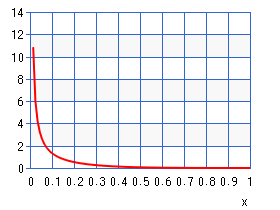
fake#betapdf() is useful as the second argument of fake#get(), and its shape chart
indicates its occurrence tendency or frequency. Refer to the following websites
about beta distribution or a way to decide the shape parameters _a,b_.
Beta distribution - Wolfram|Alpha
http://keisan.casio.com/exec/system/1180573226
To tell the truth, the built-in "country" dictionary is ordered by population.
If you need to frequently get "China" or "India" which has huge population,
"" Get a country weighted by population distribution
call fake#define('country', 'fake#get(fake#load("country"),'
                        \ . 'fake#betapdf(0.2, 4.0))')

:echo fake#gen("country")
China
:echo fake#gen("country")
India
:echo fake#gen("country")
China
The chart of betapdf(0.2, 4.0)
 ")
Other examples
"" Get an age weighted by generation distribution
call fake#define('age', 'float2nr(floor(110 * fake#betapdf(1.0, 1.45)))')

"" Get a domain (ordered by number of websites)
call fake#define('gtld', 'fake#get(fake#load("gtld"),'
                        \ . 'fake#betapdf(0.2, 3.0))')

call fake#define('email', 'tolower(substitute(printf("%s@%s.%s",'
                        \ . 'fake#gen("name"),'
                        \ . 'fake#gen("surname"),'
                        \ . 'fake#gen("gtld")), "\\s", "-", "g"))')
Add More Dictionaries
You can add your favorite dictionaries.g:fake_src_paths is a list of directory that contains dictionaries,
which will be used in fake#load() or fake#gen() as its search path.
let g:fake_src_paths = ['/home/user/.vim/fake_src1',
                        \ '/home/user/.vim/fake_src2']
Others
Please note the following two points,
- This plugin uses
sha256()as a pseudo-random generator, so that means its
distribution uniformity maybe worse than the other generator like
Mersenne Twister or XorShift.
- The built-in dictionaries are subject to change in future for
quality improvement without any announcement. If you have dissatisfaction
with the contents, please add your original dictionary on the g:fake_src_paths.