Ⅰ. 插件描述
vim syntax highlighting for k and q/kdb+ (slightly modified version of Simon Garland's syntax files)Ⅱ. 基本信息
|
Ⅲ. 安装方法
使用Vundle管理器安装
在你的.vimrc下添加:Plugin 'katusk/vim-qkdb-syntax':source %
:PluginInstall对于Vundle版本 < 0.10.2,请用上面的Bundle替换Plugin。
使用NeoBundle管理器安装
在你的.vimrc下添加:NeoBundle 'katusk/vim-qkdb-syntax':source %
:NeoBundleInstall使用VimPlug管理器安装
在你的.vimrc下添加:Plug 'katusk/vim-qkdb-syntax':source %
:PlugInstall使用Pathogen管理器安装
在终端中运行以下命令:cd ~/.vim/bundle
git clone https://github.com/katusk/vim-qkdb-syntaxⅣ. 文档说明
## Vim Syntax Highlighting and Indenting Support for k and q/kdb+
This repository contains slightly modified variants of the syntax highlighting files of Simon Garland for the k and q/kdb+ programming languages. All credits go to the original author, Simon Garland. There are other variants, namely:
Why another variant? I did not like the highlight link to-group target colors in the original one, especially with the solarized-dark color scheme.
For example, I almost exclusively use // to begin line comments in q, not with any particular special meaning or emphasis, just to keep compatibility with other editors' C-like syntax highlighting schemes lacking syntax highlighting for q. Originally, target color for the kSpecialComment group covering line comments starting with // was SpecialComment, which translates to a strong red color in case of solarized-dark. Now it is simply Comment, which is the expected-by-me neutral grey color. See the hi link commands for all the minor target-group tweaks.
Installation without a plugin manager. The following is an excerpt from the original readme.txt by Simon Garland.
Copy the files [...] to your vim home directory (probably
$HOME/.vim).If you already have a
filetype.vimthen just insert the additional k and q lines.Copy the
*.vimfiles from<syntax>and<indent>to their corresponding directories, creating them if need be.Most of the work is done in
k.vim(which is loaded intoq.vim) as q "only" adds the functions in<.q>as primitives, and relaxes the restriction on underscores in names.
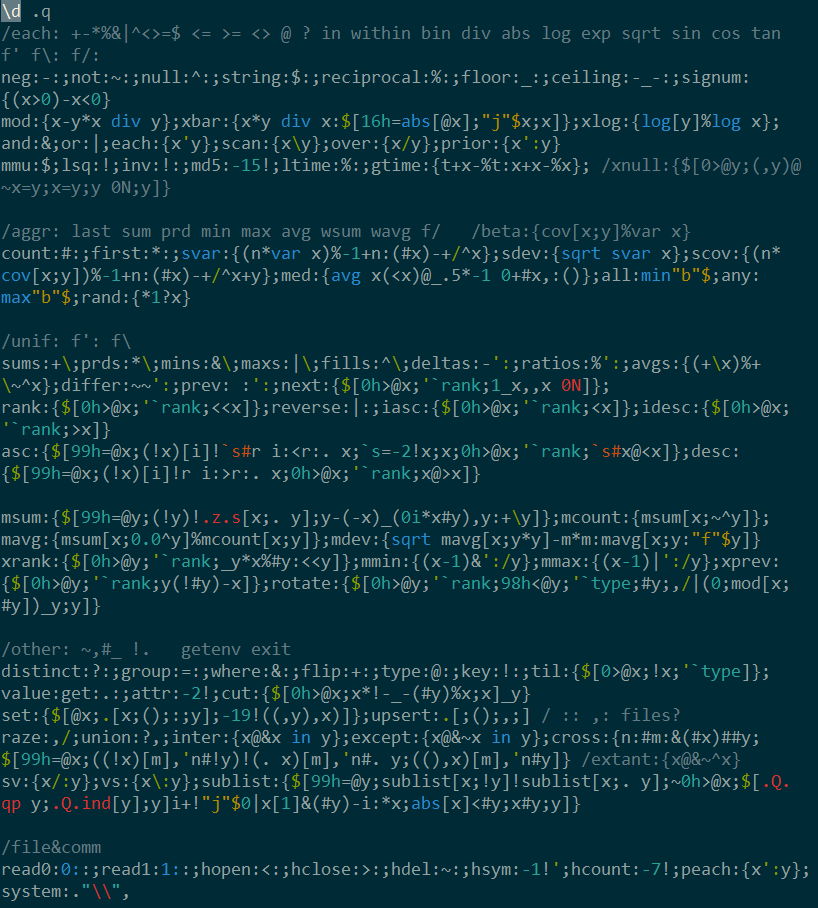
Syntax highlighting in action. The following screenshot shows the q.k file opened in vim with k syntax highlighting enabled, using the solarized-dark color scheme.